
 ·
5 minute read
·
5 minute read
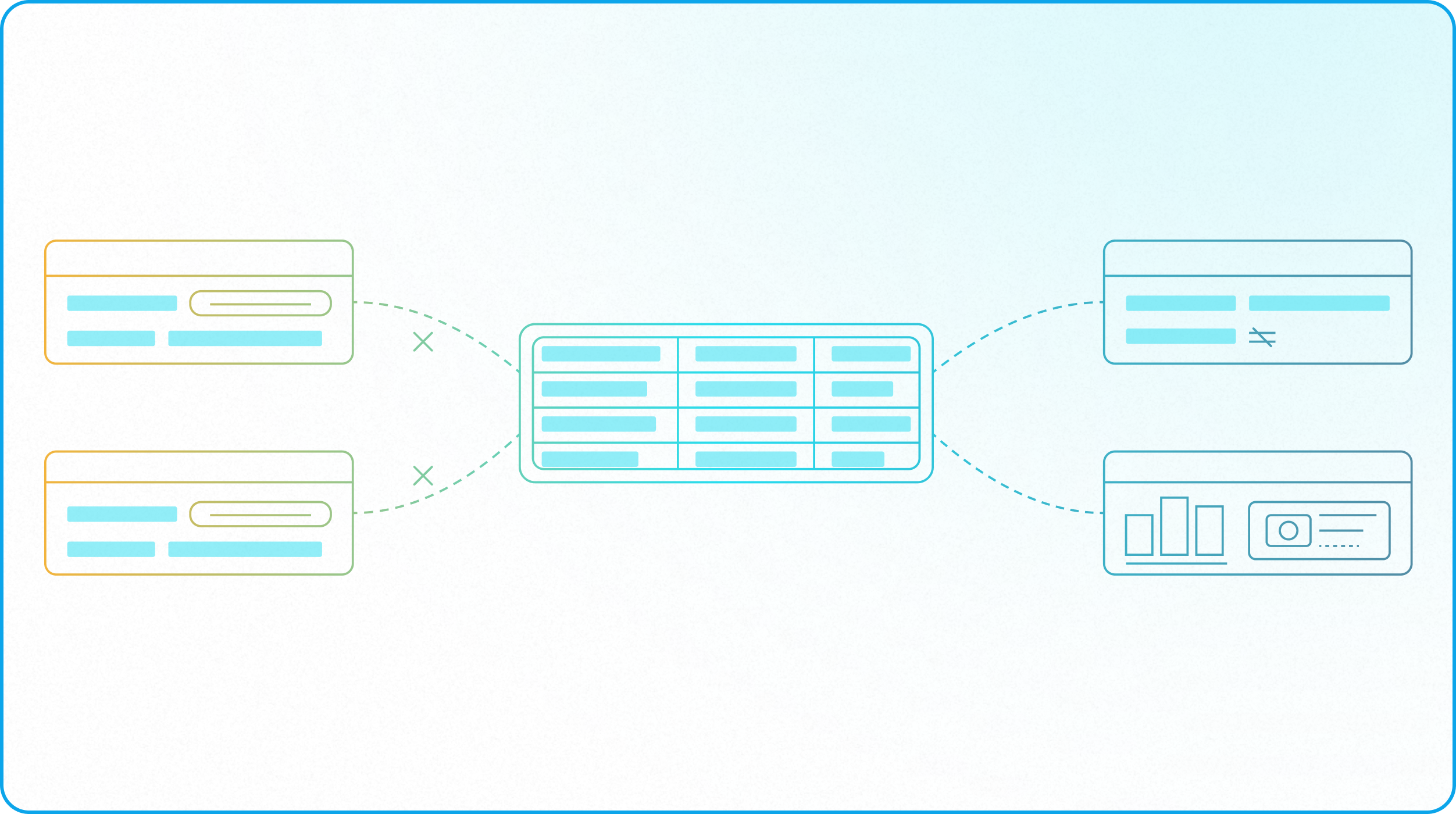
In enterprise retail operations, “Single Source of Truth” (SSOT) is often treated as a consolidation objective: merge all SKU trackers, launch calendars, vendor tables, and approval workflows into one Airtable base and assume alignment follows. But centralizing retail data without architectural governance does not create trust. It creates a larger repository.
Modern enterprise data platforms consistently define SSOT as a governed and consistent version of data that enables aligned decision-making, not simply a shared storage location. ThoughtSpot describes SSOT as a unified, accurate, and accessible version of data that supports consistent decisions across teams.
Egnyte reinforces that SSOT only works when supported by enterprise data governance frameworks including validation, access control, and auditability.
In Airtable, which retail teams use as a live launch orchestration system rather than a static warehouse, truth fails when SSOT is treated as a storage decision instead of an engineered operating model..
Why Retail Teams Still See Divergence
Retail teams often consolidate launch trackers, SKU master tables, vendor records, and approval workflows into one Airtable base. On paper, that looks like a single source of truth. In practice, divergence still appears.
Divergence in retail Airtable systems typically shows up as:
- SKU states moving independently across regions — one market marks a product “Launch Ready” while another still waits on legal approval.
- Post-approval edits overriding canonical fields — pricing, vendor assignments, or compliance flags get changed after signoff.
- Vendor integrations syncing partial or duplicated records — creating multiple “versions” of what should be one authoritative SKU.
- Executive dashboards reflecting exported snapshots instead of live lifecycle states — meaning leadership decisions rely on stale readiness signals.
Enterprise data architecture research consistently reinforces this pattern: centralization without governance still produces fragmentation. AtScale defines SSOT as centralized authoritative access to consistent data, but stresses the need for integration discipline and uniform definitions across systems:
In retail operations, that means lifecycle logic, approval hierarchies, and integration validation must be structurally enforced, not assumed. Without enforcement logic, a “single base” becomes a central collection of inconsistent retail behaviors.
What Truth Actually Requires in Enterprise Retail Airtable Systems
1. Lifecycle Governance: Enforced SKU State Architecture
In retail, truth is not a record. It is a state.
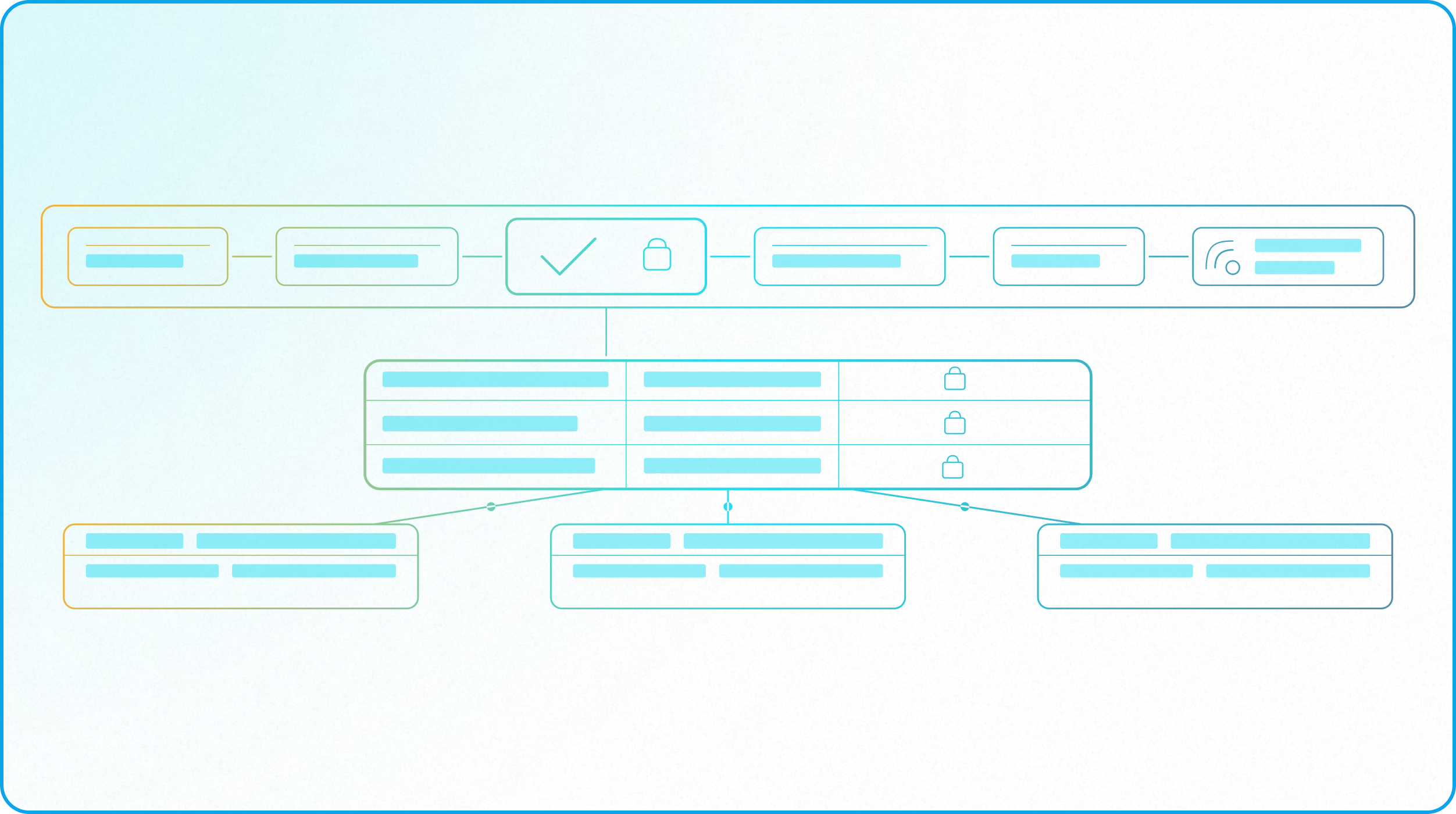
A SKU moves through defined lifecycle phases — Draft → Pricing Approved → Legal Approved → Vendor Confirmed → Launch Ready → Live. If those transitions are not governed, the system fractures.
Retail lifecycle governance requires:
- Defined approval hierarchies — Legal cannot be bypassed by Ops.
- Controlled write permissions — post-approval fields cannot be casually edited.
- Locked downstream dependencies — a SKU cannot move to “Launch Ready” if vendor confirmation is incomplete.
- Cascading updates across markets — when HQ updates compliance status, every region inherits it.
Enterprise data strategy research reinforces that ownership models, access control, and governance structures are foundational to reliable enterprise systems, not optional add-ons.
In Airtable, lifecycle logic does not exist by default. It must be engineered. Without it, regional teams effectively fork the operational state of the same product.
2. Integration Enforcement: Protecting Canonical SKU Records
Retail Airtable systems ingest inputs from:
- Vendor onboarding portals
- ERP or finance platforms
- Asset management systems
- Pricing tools
- Collaboration platforms
If integrations:
- Sync records without schema validation
- Create duplicate SKUs instead of reconciling IDs
- Overwrite canonical fields without rule enforcement
Then the system’s integrity erodes silently.
Enterprise data quality research consistently highlights that validation, deduplication, and standardization are mandatory before data is treated as authoritative:
In retail launch environments, every inbound update must respect lifecycle status, approval hierarchy, and regional constraints, a discipline emphasized by retail data governance frameworks that ensure accuracy, consistency, and operational readiness across channels:
3. Cross-Region Operational Consistency: One Launch Reality
Enterprise retail organizations coordinate:
- Regional rollout timelines
- Market-specific pricing adjustments
- Localization of product data
- Staggered launch schedules
Truth in this environment means:
- Every region sees the same canonical SKU lifecycle state
- Legal approval in HQ propagates automatically to dependent markets
- Vendor confirmation updates reflect instantly across regional dashboards
- Executive readiness dashboards pull from live lifecycle logic, not exports
Internal architecture principles already establish that governance is a design discipline, not a feature toggle. Most Airtable builds collapse at scale not because data is centralized, but because lifecycle enforcement, integration control, and cross-region propagation were never architected.
The Hidden Retail Risk: False Confidence in “Centralization”
Retail operators rarely lose trust in their system immediately. The system appears unified. The dashboards load. The base is centralized.
The failure shows up later — during pressure moments:
- A regional launch stalls because compliance status wasn’t propagated.
- Pricing is updated post-approval in one market but not another.
- Vendor changes create duplicate SKUs that finance doesn’t catch until reporting.
- Executives see conflicting readiness signals across dashboards.
Retail leaders consistently face operational misalignment when fragmented data systems and siloed processes fail under launch pressure, a pattern highlighted in industry research showing that bridging the gap between data and operational decision-making is a core challenge for retail organizations.
A single Airtable base without lifecycle enforcement gives retail teams the appearance of coordination while allowing structural drift underneath.
Retail Truth Is a System Contract, Not a Table Structure
For enterprise retail organizations, a true source of truth is not defined by consolidation.
It is not:
- One base.
- One dashboard.
- One consolidated SKU table.
It is a system contract, a set of enforced rules that determine how product data behaves across markets, teams, and workflows. Retail data governance frameworks make clear why structured processes and policies are essential to operational consistency across channels and functions:
That contract governs:
- Who can move a SKU from “Legal Approved” to “Launch Ready.”
- When a lifecycle transition is valid based on upstream dependencies.
- How vendor updates reconcile against canonical SKU identifiers.
- How regional adjustments are constrained by enterprise approval logic.
- How status propagation flows from HQ to every market without divergence.
Retail Airtable builds often fail at this layer. They centralize structure but decentralize authority.
When control is not engineered:
- Regions invent local patches.
- Teams bypass structured interfaces.
- Manual exports re-enter the workflow.
- Reporting becomes interpretive instead of authoritative.
Decision Framework: Does Your Retail Airtable Qualify as a True Source of Truth?
Retail operators should evaluate their system against operational reality, not structure.
Ask:
- Can a SKU move to “Launch Ready” without every required dependency being complete?
- Can a regional team overwrite compliance or pricing fields after approval?
- Do vendor updates reconcile against a canonical SKU ID — or create duplicates?
- If HQ updates lifecycle status, does every region reflect it immediately?
- Do executive dashboards reflect governed lifecycle logic — or snapshots?
What To Do If Those Answers Are “Yes”
If even one of those questions exposes weakness, the problem is not cosmetic; it's architectural. Retail operators in this position typically respond in one of three ways:
- Patch the issue locally (add a new field, another automation, a temporary override).
- Spin up a parallel tracker for one region.
- Export data manually to “control” reporting accuracy.
All three create more fragmentation, and to fix it, you need governance architecture. Retail industry research consistently highlights that data fragmentation and siloed technology environments are among the top challenges retailers face when trying to coordinate operations at scale.
That begins with:
- Mapping the SKU lifecycle as an enforced state model.
- Defining canonical fields and locking post-approval writes.
- Establishing permission tiers aligned to retail roles (HQ, Legal, Regional Ops, Finance).
- Designing integration validation layers before data touches canonical records.
- Standardizing regional propagation rules.
The Architectural Difference
InAir’s positioning is explicit: we design Enterprise Airtable Systems for Ops & RevOps Teams.
That positioning reflects a specific approach:
- We do not treat Airtable as a productivity tool
- We treat it as a governed operating system
As outlined in Airtable Governance Is Not a Feature — It’s a Design Discipline, governance must be engineered into lifecycle states, permissions, and integrations from the foundation up. For a Head of Retail Operations, the internal builder operating at the intersection of Ops, Legal, and Regional teams, which means:
- You do not become the bottleneck.
- Regions cannot fork lifecycle logic.
- Legal cannot accidentally overwrite post-approval SKU states.
- Vendor feeds cannot silently duplicate canonical records.
- Dashboards reflect governed states, not patched interpretations.
Instead of adding more automations, we:
- Formalize lifecycle contracts.
- Harden canonical record control.
- Introduce validation checkpoints.
- Design cross-region propagation logic.
- Document governance rules so the system survives scale.
If your retail Airtable system cannot enforce these conditions today, the next step is an architectural assessment with our expert Airtable Consultants. InAir works with enterprise retail teams (like Dollar Tree and Williams-Sonoma) to evaluate lifecycle enforcement, integration discipline, and cross-region governance before fragmentation compounds.