
 ·
3 minute read
·
3 minute read
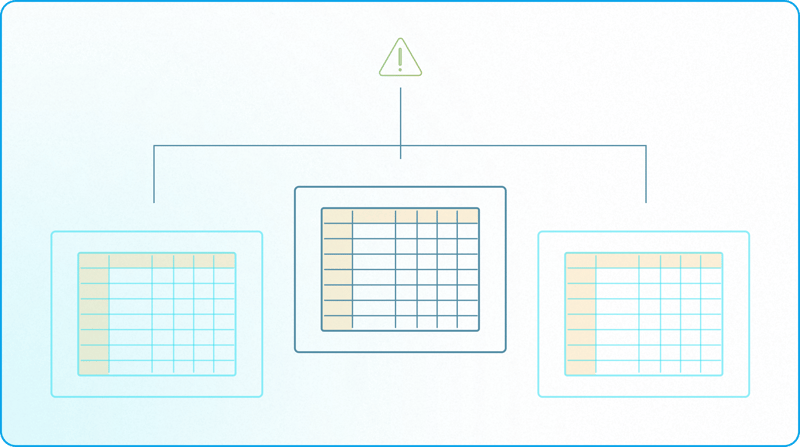
That shift exposes a problem most rollout plans never address: Airtable systems are often rolled out by copying local solutions before anyone decides which assumptions should scale and which should not. This is a familiar failure pattern in retail operations, where standardization without architectural intent tends to amplify variance instead of reducing it.
The Local Success Trap
Most Airtable rollouts start with a genuine success: one team builds a base to track store openings, inventory movements, labor planning, or vendor coordination. The workflow fits their reality, data is clean, and decisions are fast. So much so that leadership wants the same outcome everywhere, and the base is duplicated.
What gets duplicated along with the structure are the original team’s assumptions:
- How exceptions are handled at the store level
- Which fields are advisory vs authoritative
- How approvals actually happen under time pressure
- Which steps can be skipped when reality intervenes
Those assumptions may be reasonable locally, but once replicated, they quietly become policy. This is the same dynamic seen when operational tools evolve into systems of record without governance. In retail, where location variance is unavoidable, this is where friction begins.
This pattern is well documented in large-scale operations, where solutions optimized for local performance tend to break when promoted without redesign (a failure mode often referred to as local optimization at the expense of system-wide outcomes.)
Replication Creates Uniformity. Architecture Creates Control.
Copying a base produces consistency on the surface. Architecture determines where consistency is required and where flexibility must exist.
Retail operations already distinguish between:
- Corporate-level reporting standards
- Regional execution differences
- Store-level exceptions
When Airtable rollouts don’t reflect those boundaries, they push variance into places it doesn’t belong: helper fields, side tables, manual overrides, and ad-hoc processes. Over time, this erodes trust in data and slows decision-making.
This isn’t an Airtable limitation; it's a design issue. Enterprise system design has long emphasized the need for explicit boundaries to prevent logic from leaking across domains, a principle formalized in bounded context architecture and widely applied in large operational platforms.
In Airtable, those boundaries have to be intentional — because the tool won’t impose them for you.
How Fragility Actually Shows Up in Retail Rollouts
Retail Airtable systems rarely “break” outright. They become fragile.
You see it when:
- a regional change forces updates to global reports
- store-level exceptions pollute executive dashboards
- teams avoid touching core tables because downstream effects are unclear
- automation logic compensates for unresolved rules
This is the moment described in many large Airtable deployments where interfaces and automations start masking structural issues instead of enforcing rules, a pattern that often precedes governance breakdown.
At scale, fragility isn’t about volume. It’s about coupling: too many decisions bound together that should have been separated before rollout. In retail operations, this kind of hidden coupling is a known risk in system rollouts, where tightly linked workflows reduce resilience and make change disproportionately expensive.

What Architecture Changes Before Rollout
Architecture doesn’t slow rollouts: it changes what gets rolled out. Systems that are designed to be repeated behave very differently from systems designed to solve a single instance of work.
Well-designed Airtable systems separate:
- Decisions that must be consistent company-wide
- Logic that varies by region or format
- Execution data from reporting data
- Rules from exceptions
This is how enterprise platforms remain repeatable without becoming rigid, a principle echoed in how large operational systems are structured for reuse rather than duplication.
In Airtable, this means rollouts succeed when:
- local execution doesn’t rewrite global meaning
- global reporting isn’t polluted by local workaround logic
- stores can move fast without breaking trust upstream
That only happens when decision boundaries are designed before replication begins.
The Real Value of Reframing Rollout Failure
The most valuable shift for rollout owners isn’t learning how to copy bases faster: it’s changing how rollout readiness is evaluated.
Instead of asking whether a base “works,” the better question is whether it can be repeated without importing local assumptions into global structure. That reframing moves the conversation away from adoption and training and toward architecture, governance, and decision ownership.
This reframing aligns with how mature organizations evaluate rollout readiness, not by rebuilding everything, but by identifying which decisions are being scaled unintentionally and resolving them structurally before rollout pressure makes them expensive to unwind.
This is also where experienced Airtable consultants tend to add the most leverage: bringing pattern recognition from past rollouts to surface risks early and move teams through these decisions faster than internal iteration allows.