
 ·
3 minute read
·
3 minute read
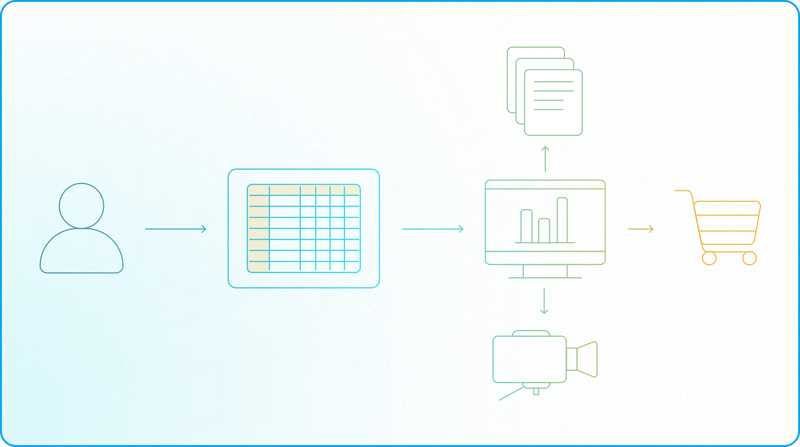
When dashboards read from it, automations act on it, and teams across functions make decisions based on what it shows, the challenge stops being “does this work” and becomes “can we change this safely and predictably?”
That’s where operating mechanics start to matter.
Teams that get long-term value from Airtable don’t treat it as a finished build. They treat it as an internal platform, something that evolves under change discipline, not just additive design. They make clear decisions about what parts of the system are stable, how changes are introduced, how compatibility is preserved, and when legacy logic is retired.
This shift (from building products quickly to running internal platforms reliably ) is a core theme in modern internal tool strategy, where operational repeatability and change governance are non-negotiable.
Airtable is built to help teams move fast, and that’s a feature of its design, but what determines whether an Airtable environment holds up over time isn’t how it’s built, it’s how it’s run.
Contracts: when other teams depend on your fields, you’re publishing an API
The first sign you’re operating a system isn’t usage, it’s dependency: as soon as another team, tool, or workflow consumes data from Airtable, structure stops being internal. Field names, status values, and timing become assumptions other people build on. At that point, changing them is no longer cleanup, it’s a breaking change.
This is why platform teams treat shared data models as contracts, even when they live inside internal tools. Once something is depended on, stability becomes part of the operating model, not a technical preference.
In Airtable, this shows up in familiar ways:
- A status value becomes a trigger for downstream work
- A field name becomes a hard-coded mapping in an integration you don’t own
- A “temporary” table becomes the source for a dashboard leadership trusts
Teams that keep Airtable flexible don’t avoid contracts, they make them explicit: which parts of the schema are stable, which are allowed to change, and how changes are communicated.
Release thinking: changes need a lane, not a brave editor
When a base is still a build, editing in place feels natural. When it’s a system, editing in place becomes the fastest path to accidental incidents. The difference isn’t bureaucracy, it’s having a change path that matches risk.
Mature teams separate routine changes from high-impact ones: small updates can move quickly, riskier changes have a way to be validated and introduced deliberately, without surprising downstream users.
This mirrors established release-management practices in internal systems, where the goal is not to slow teams down, but to keep velocity from turning into instability. Teams that operate it as a system choose this as a discipline because they’ve learned that predictable change is what keeps trust intact.
Versioning: stable evolution beats “perfect design”
Systems stay useful because they evolve without forcing everything to change at once. In practice, this means allowing old and new structures to coexist temporarily: new workflows adopt updated models; existing integrations continue to work until they’re intentionally migrated.
This approach is standard in platform evolution, where backward compatibility is treated as a design constraint rather than a burden.
Applied to Airtable, versioning looks like:
- Introducing a new status model alongside the old one
- Migrating consumers gradually instead of flipping everything at once
- Treating coexistence as a feature, not a failure
When teams struggle to change structure safely, it’s rarely a design problem; it’s almost always a versioning problem.
Deprecation: the mechanic most teams skip
Airtable builds are excellent at adding. Systems survive because they remove things intentionally.
Without an explicit deprecation practice, bases accumulate logic no one fully understands anymore: fields linger because “something might use them.” ; automations stay active because no one owns them; tables remain because deleting them feels risky.
This pattern is well documented in IT operations: unmanaged legacy is one of the fastest ways complexity compounds.Teams that operate Airtable as a system treat deprecation as planned work:
- What is being replaced
- When it will be retired
- What depends on it today
- Who signs off on removal
This is what allows teams to keep the system current instead of working around old decisions forever.
The operating checklist that tells you what you’re really running
If Airtable is already central to execution, this question cuts through quickly:
Are you running operating mechanics, or relying on a successful build?
A simple pressure test usually makes it clear:
- Contracts: Could you rename your most-used fields without breaking downstream work?
- Releases: Do you have a safe way to introduce high-impact changes?
- Versioning: Can you evolve structure without forcing everyone to switch at once?
- Deprecation: Can you remove something cleanly and prove nothing depends on it?
If most answers are no, the system isn’t failing. It’s being operated without the mechanics that long-lived internal platforms rely on.